
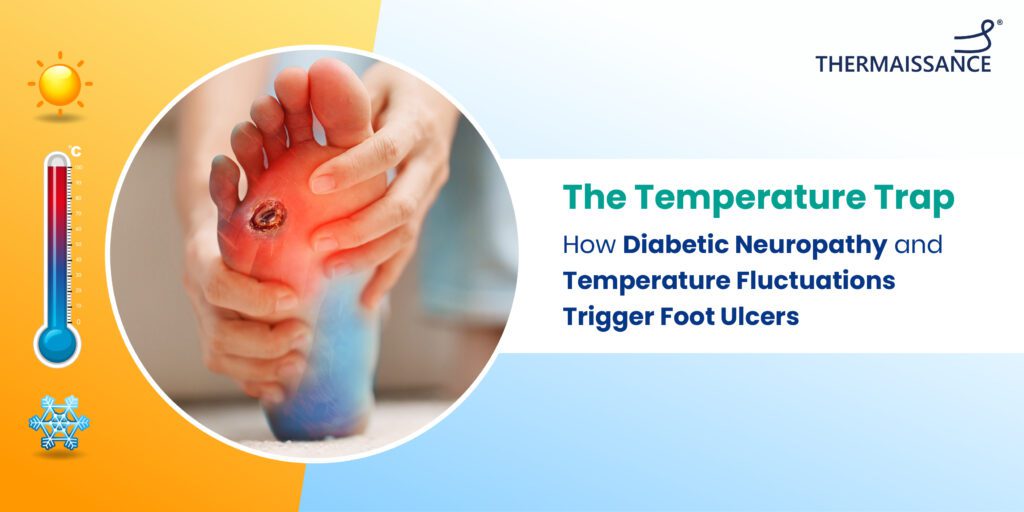
Diabetic neuropathy is a serious complication of diabetes affecting around 50% patients with Type 1 or Type 2 Diabetes1. The symptoms include loss of sensation in the feet or arms, delayed wound healing, and difficulty maintaining balance while walking1. What makes diabetic neuropathy even more concerning is the direct impact it has on foot health.
Understanding diabetic foot – a silent threat beneath the feet
Diabetic foot ulcer is observed in almost 50% of patients with diabetic neuropathy2. It is a wound that forms due to nerve damage from diabetes. Reduced sensation, poor blood flow, and temperature changes in the feet slowly injure the skin, leading to ulcers that often go unnoticed by patients2.
Why do diabetics experience temperature change in their feet?
There are multiple reasons why people with Diabetes experience temperature fluctuations3:
a)Nerve damage: Nerves damaged by Diabetes often fail to transmit signals about temperature properly, the feet can feel excessively cold or hot even when the actual temperature is normal. Therefore, patients may not notice if their feet are exposed to dangerous temperatures increasing the risk of injury.
b) Restricted blood flow: The small blood vessels in the feet do not constrict or dilate properly in response to temperature changes. This can lead to increased blood flow causing the feet to be consistently warmer than usual, or decreased blood flow causing them to be colder. Sometimes, insufficient blood flow makes it difficult for the body to deliver warmth, oxygen, and nutrients to the foot tissues, thereby resulting in a persistent cold sensation, especially in the toes.
Prevention of diabetic foot ulcer starts with smart socks
Along with maintaining proper foot hygiene, patients can greatly benefit from the use of diabetic socks.
The key components that good quality diabetic socks should provide are –
Thermoregulation: to keep feet comfortable in hot or cold conditions
Antimicrobial Protection: against a wide range of pathogens, including fungi (yeast, mold) and bacteria in order to minimize the risk of infections.
Enhanced Microcirculation: for faster wound healing and recovery.
Cushioned Support and Non-Restrictive Fit: for pain relief and comfort:
Durability and Sustainability: Finally, diabetic socks should maintain antimicrobial efficacy
and structural integrity over prolonged use and frequent washes, ensuring long-term cost efficiency and sustainability.
Thermaissance Diabetic Socks – Engineered for Protection and Comfort
The Thermaissance diabetic socks are specially crafted for the comfort and prevention of diabetic foot ulcers. They are widely recommended by doctors for their superior diabetic socks technology, making them a smart choice for diabetic foot care.
References:
- Feldman EL, Callaghan BC, Pop-Busui R, Zochodne DW, Wright DE, Bennett DL, Bril V, Russell JW, Viswanathan V. Diabetic neuropathy. Nat Rev Dis Primers. 2019 Jun 13;5(1):42. doi: 10.1038/s41572-019-0097-9. PMID: 31197183; PMCID: PMC7096070.
- Volmer-Thole M, Lobmann R. Neuropathy and Diabetic Foot Syndrome. Int J Mol Sci. 2016 Jun 10;17(6):917. doi: 10.3390/ijms17060917. PMID: 27294922; PMCID: PMC4926450.
- Papanas N, Papatheodorou K, Papazoglou D, Kotsiou S, Maltezos E. Association between foot temperature and sudomotor dysfunction in type 2 diabetes. J Diabetes Sci Technol. 2010 Jul 1;4(4):803-7. doi: 10.1177/193229681000400406. PMID: 20663441; PMCID: PMC2909509.